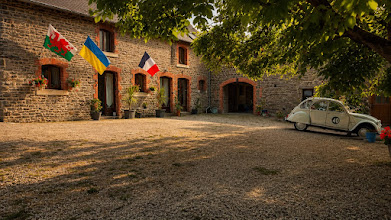
There has certainly been a house here for a long time.
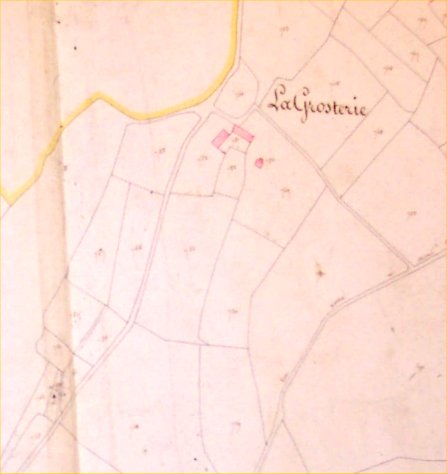
It is difficult to date the buildings exactly, but there are 3 buildings shown on the
1822 map, one of which is in
the same position today.
The main house, however, was probably built around 1850 and originally was divided
into two parts - living accommodation for people on one side and animals on the other.
We do have a "resident" ghost, but his activities are limited to smoking a pipe.
He seems to keep an eye on what is going on!
The house is set in 17 acres of grounds, which in turn is within a nature reserve.
We have a mixture of a small parkland around the house, open fields which are harvested
for hay and a wild woodland bordering the river.
|
|
|
|
The locals have told us stories about previous occupants and when certain trees were planted. The lime tree in the middle of the field was planted in the mid 1930's and the characteristic fir trees "Les Sapins" were planted about 1950.
|
|
We were fortunate to inherit many years of gardening work with fruit (Mirabells, Gooseberries,
Raspberries, Blackcurrants and Redcurrants),although we had to remove the small apple orchard
as it had been neglected.
We are slowly re-planting the apple trees.
About 25 years ago the house and outbuildings were used by a family that bred horses, probably
for "trotting" as there is still evidence of an oval trotting track to one side of the house.
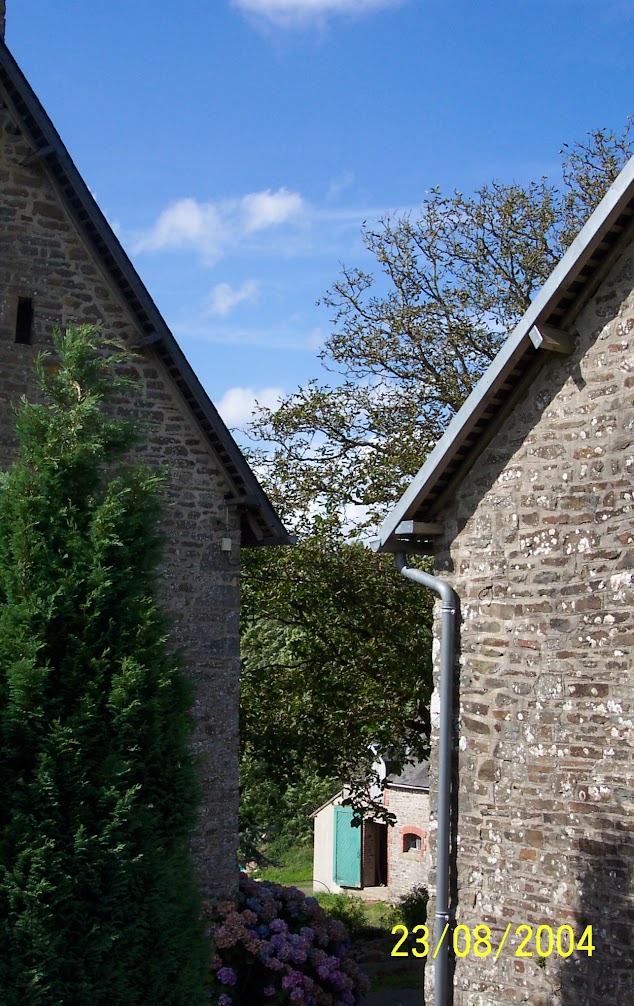
The top stable building originally had 3 large stalls and has only recently has work been started
to convert it into a "Gite".
It was probably extended to enlarge the hay-loft in about 1900.
There is an extension at the back of this barn which will house the solar water heating system and
bio-diesel systems.
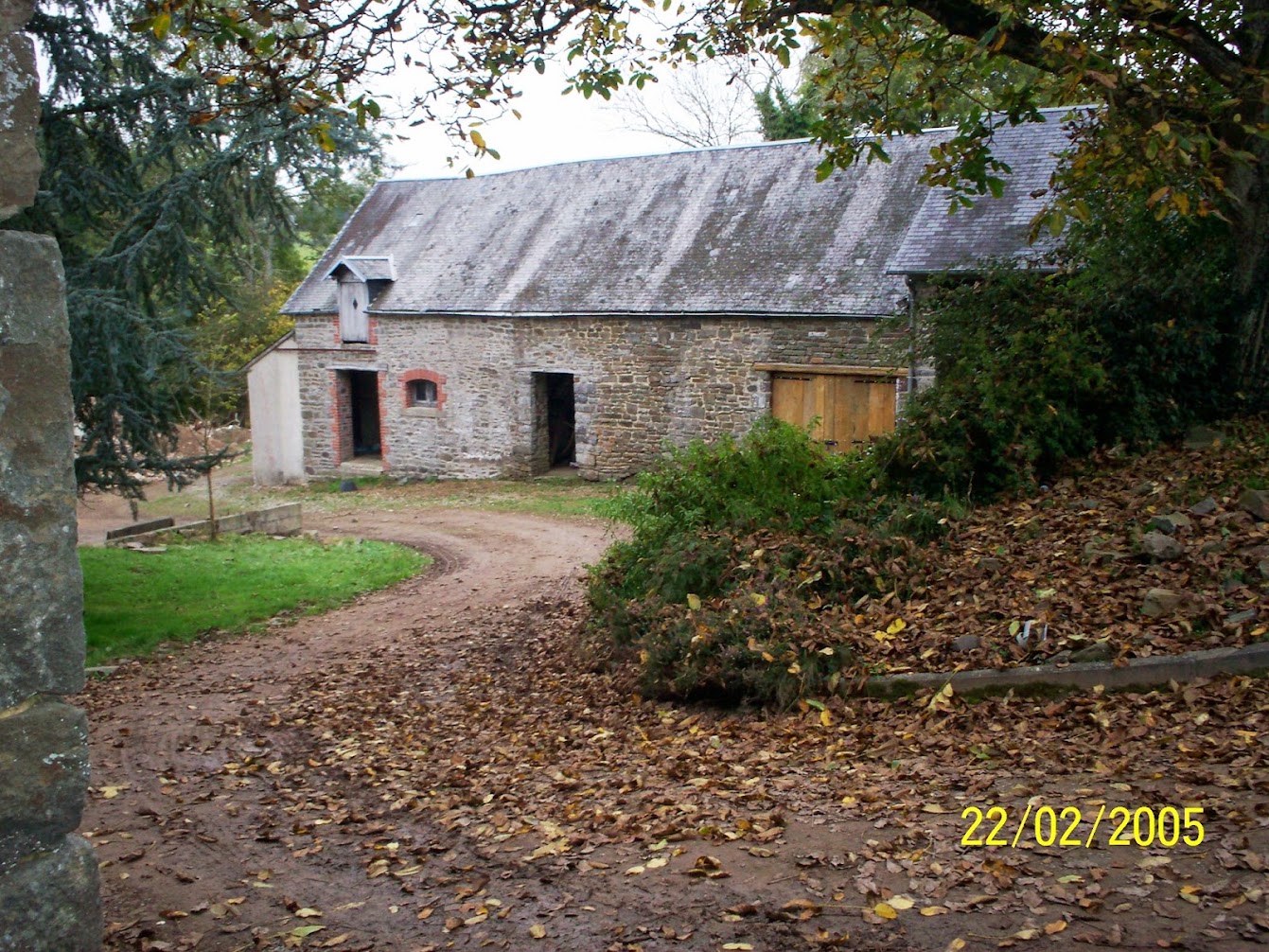
The bottom building is considerably older with more character.
It provides winter accommodation for our animals and also workshops, garages and a large garden store.
This building is clearly shown on the 1822 map (below).
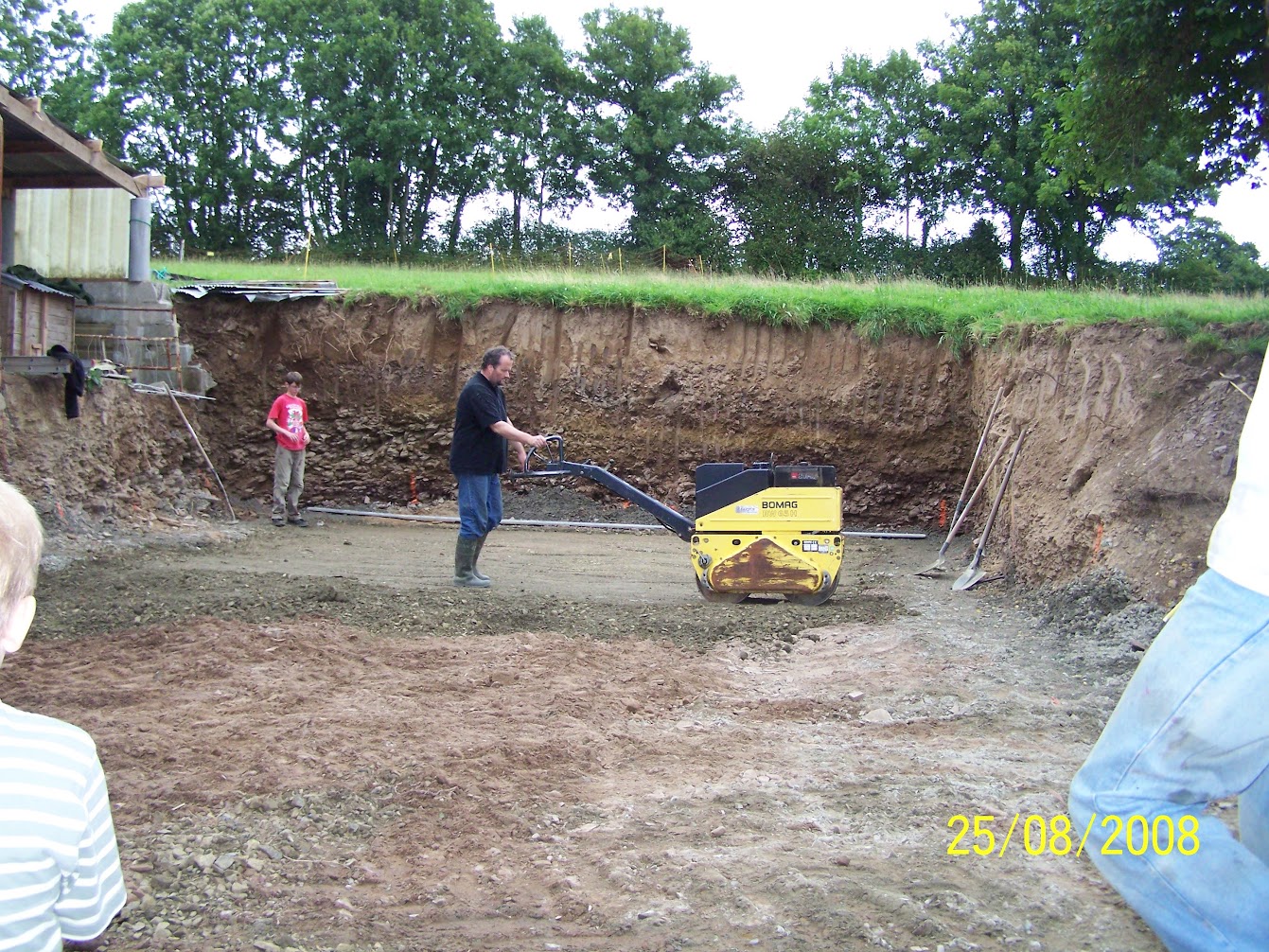
Our neighbour John Haden delivered 800 tonnes of soil to us during the summer. He had an excess of soil
and we had a piece of rough ground just before the woods. It was inaccessible with the ride-on tractor
and pretty much unused. The soil delivery just about managed to level the area and we were intending to
landscape it and dig a duck pond.
However, we noticed that the soil (from the top level in Mesnil Amand) had a high clay concentration
and readily formed puddles which never seemed to dry out in the summer. A couple of weekends were spent
enlarging and joining the puddles to make a pond. It ended up bigger than we first intended, but it
was well situated to reflect the trees behind and enhance the view. There is also less grass to cut!
At the moment, it has filled naturally and on one occasion has threatened to test the ability of the
overflow system. I think that a 30cm storm overflow will be needed in addition.
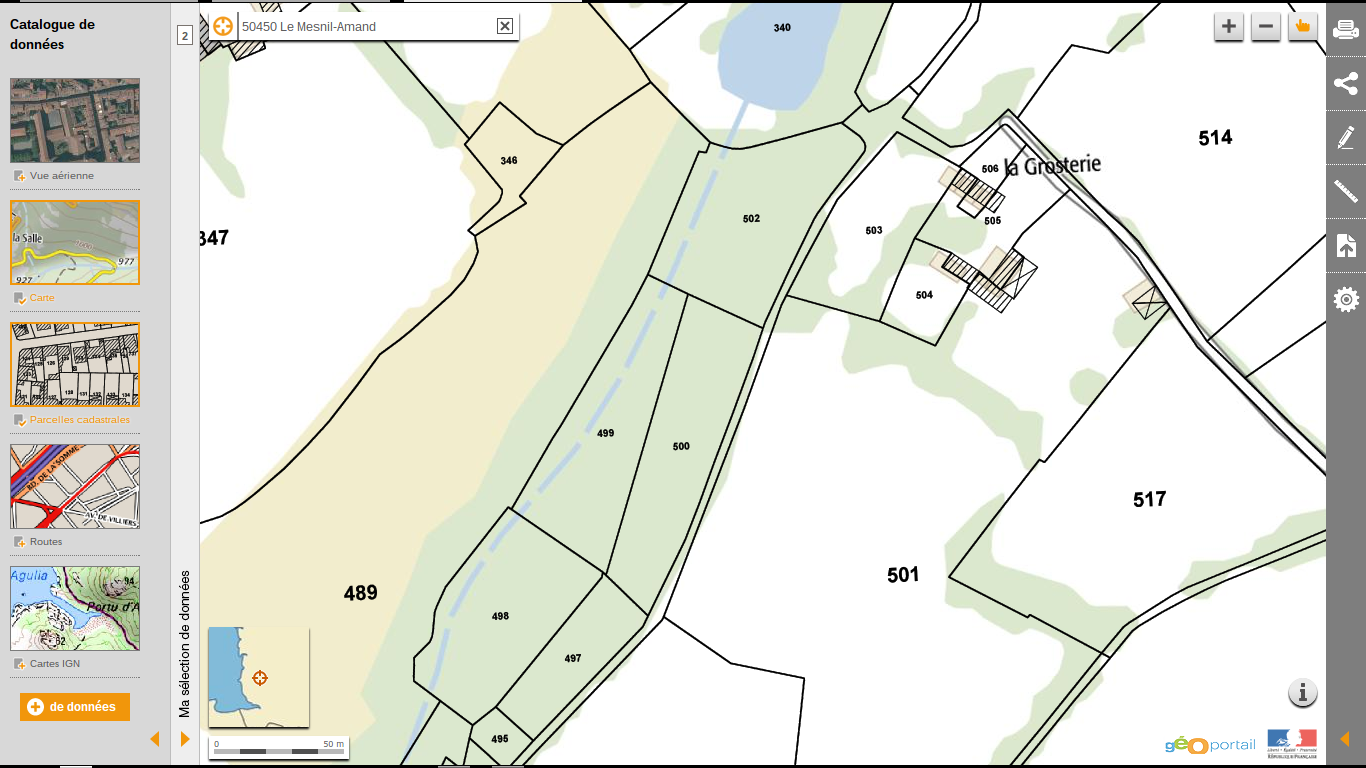
Geoportail (www.geoportail.fr)
gives a better satellite view than Google of La Grosterie at the moment, but the image is several years old.
As we are at the end of a 1km no through road, the only visitors are people we know, or people who are lost!
The cadastral map shows that most of La Grosterie's land (in green) is to the south.
The top part of the map, above the horizontal line, corresponds with the satellite view.
The note on the map "Chemin Rural" refers to an ancient lane or right-of-way.
These were maintained by the village to allow access to fields that had become sub-divided due to the inheritance laws.
These lanes needed to be wide enough "to lead a cow" through.
The Chemin Rural passes through the woods, but is now impassable due to nature claiming it back.
At sometime, we intend to clear the lower part of the Chemin to make a woodland walk.
I photographed the 1822 map at the Mayor's office.
I will eventually enhance the image to make it clearer, but there is enough detail to show how little the
field structure has changed and also the original location of the buildings.
The existing bottom barn is shown on the map (longest building), but the other two have gone.
The small building was almost certainly a "boulangerie" and the external chimney construction is just visible.
When the grass is short, the remains of the foundations are just visible in the field by the top barn.
The other large building shown on the left (west) side has gone completely and the area is now covered by a hard-standing
constructed for the horse boxes.
This was probably the location of the original house.
Again, I have "cropped" the image to correspond with the satellite view.